
Heat pump hot water – overnight temperatures & Eco Mode
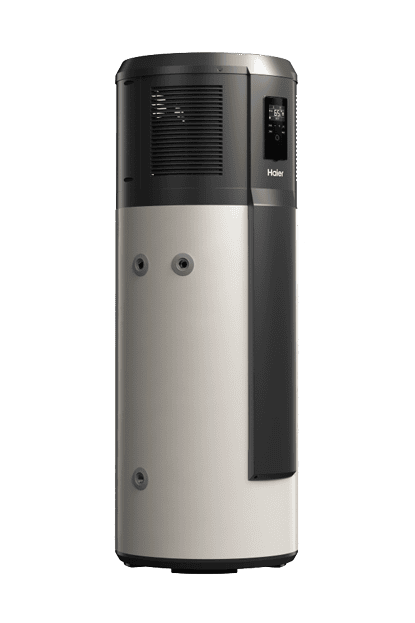
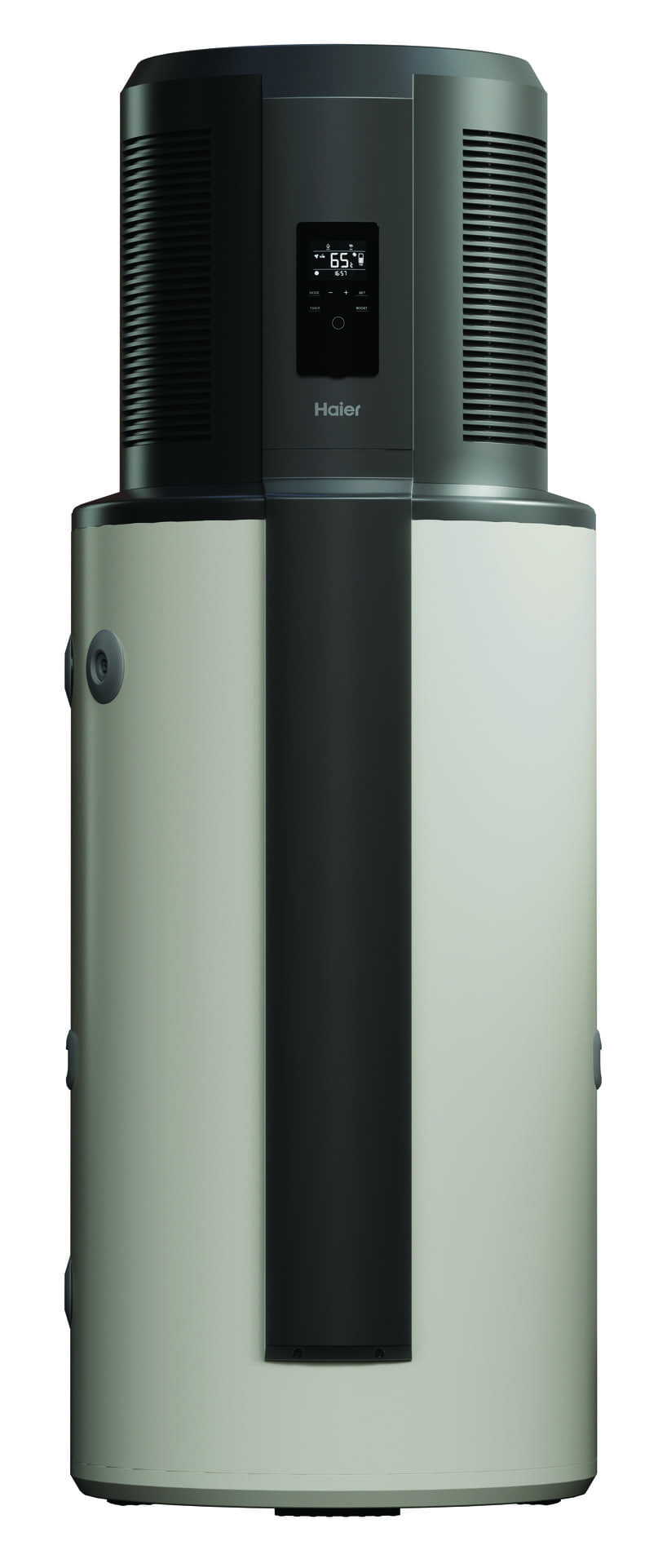
Losing 5 to 10 degrees in hot water tank temperature (according to the display or app) overnight without using any hot water is actually completely normal behaviour for a newly installed heat pump hot water system, especially during chilly Tasmanian nights. Here is an example of two Haier Monobloc Heat Pump Hot Water Systems, the 330L on the left (larger households 4 to 6 occupants) and the standard 250L version.
1. Thermal Stratification & Sensor Placement
Hot water naturally rises to the top of the tank, while cooler water settles at the bottom. Heat pump temperature sensors are typically located in the lower or middle sections of the cylinder. Overnight, as the water sitting in the internal copper pipes cools down, it drops back into the bottom of the tank. This registers as an overall temperature drop on the sensor, even though the water at the very top of your tank (which supplies your showers) is still perfectly hot.
2. Built-In “Hysteresis” (Differential Temperature) Settings
Most modern heat pumps are programmed with a differential temperature buffer (called hysteresis), which is usually set between 5°C and 8°C. If your target temperature is 60°C or 65°C, the system intentionally allows the tank to cool down to 55°C or 56°C before firing up. This clever design prevents the compressor from “short-cycling” (turning on and off constantly for minor 1-degree losses), which would dramatically shorten the lifespan of your unit and waste electricity.
3. Tasmanian Ambient Overnight Heat Loss
While high-quality tanks feature excellent insulation, no tank is a perfect thermos. In Tasmania’s cold climate, standing heat loss naturally occurs overnight through the tank walls and uninsulated external brass valves (like the Temperature Pressure Relief valve). A minor drop of a few degrees overnight is standard thermal radiation.
4. Timer Settings or Block-Out Periods
If your unit is turning on at an exact time, say 7AM every morning, it is highly likely that your installer set a built-in timer or block-out period. This is common practice to prevent the noisy compressor from running in the middle of the night, or to align the heating cycle with cheaper off-peak morning power tariffs or upcoming daytime solar generation.
Haier Monobloc All-In-One Heat Pump Hot Water System
My Haier Monobloc compressor turns on a 7AM Sharp every morning
Haier Monobloc units come equipped with built-in Wi-Fi that connects directly to the Fisher & Paykel / Haier SmartHQ app. If your compressor kicks in at precisely 07:00 each morning, the system is almost certainly running in ECO Mode.
- In ECO mode, the unit follows a user-programmed timer or an off-peak power schedule to avoid running in the middle of the night when Tasmanian ambient temperatures drop drastically.
- At 07:00, the “block-out” period ends, and the machine wakes up to sample the water and top off any minor ambient heat loss from the night.
How to check or adjust this:
- Check the Display Mode: Look at your tank’s control screen or open your SmartHQ app to see if it is set to ECO or AUTO mode.
- Adjust the Temperature: If you want more hot water capacity, press the + button on the tank interface to increase the target temperature from 55°C up to 60°C or 65°C.