
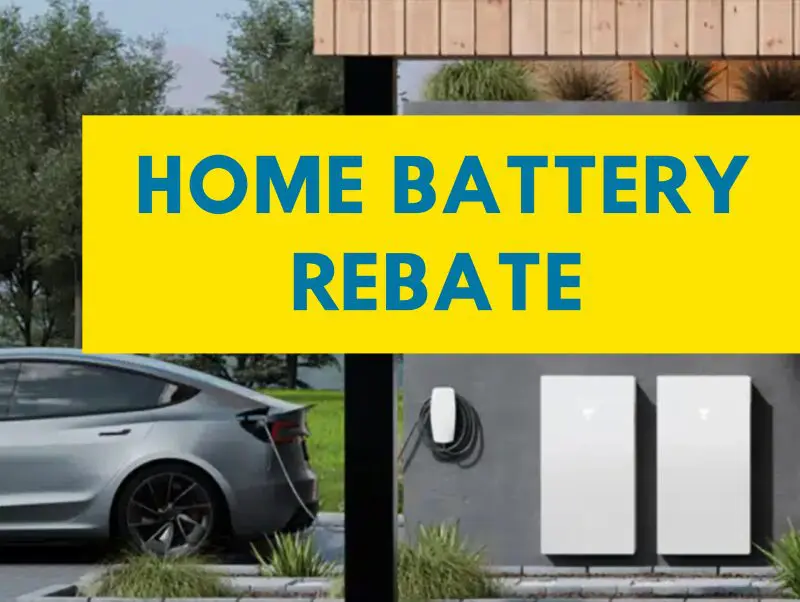
Cheaper Home Batteries Program
The Australian Government has introduced a home battery rebate scheme as of 1st July 2025 which aimed at reducing the cost of a standard residential battery installation by about 30%. The battery rebate is reducing every 6 months, but the cost of batteries is also reducing (due to economies of scale), which means that there are still huge savings on batteries ongoing.
Start the process by filling in an Expression of Interest form for a home battery, which will lead to a formal assessment and quotation.
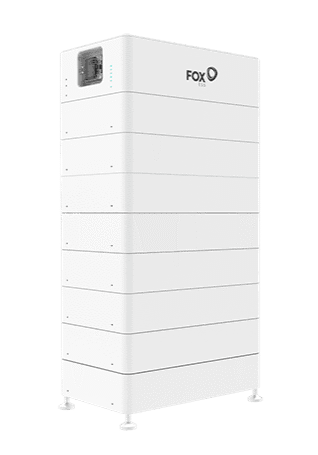

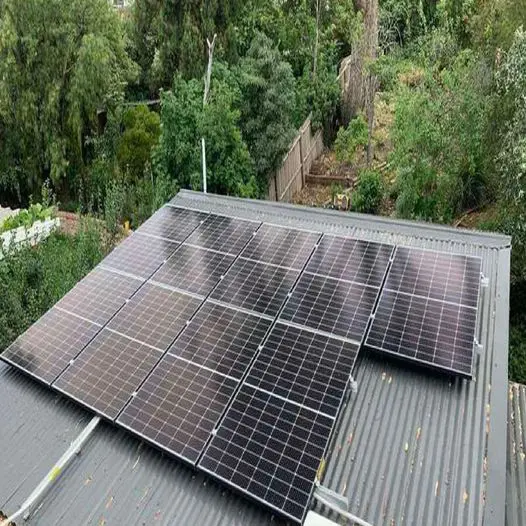
7.99% Brighte Green Loan
A 7.99% Green Loan is a personal loan for energy efficiency investments that is subsidised by the Clean Energy Finance Corporation (CEFC). This finance product doesn't require a deposit, is payable over up to 60 months and can have up to $30k funded.
Eligible products:
Products available to be financed under the subsidised Brighte Green Loan include:
- home battery storage systems
- solar panel systems
- household battery storage systems
- reverse cycle electric heating and cooling systems (heat pumps)
- electric heat pump hot water systems
- ducted air circulation systems

Heat Pump Subsidy:
Now $1,500
A bigger helping hand towards a warmer home
The heat pump subsidy available through the NILS program has increased to $1,500 for eligible Tasmanians, up from $1000. That's an extra $500 towards your heat pump installation!
In addition, you may be able to access the balance on a genuine no deposit, interest-free loan over 24 months (up to $2,000 total).
Who may be eligible?
You may be eligible if you hold a:
- Health Care Card
- Pensioner Concession Card
- Department of Veteran Affairs (DVA) Card Holder
Eligibility is subject to NILS requirements and approval.
Want to find out if you qualify and what your options are?
Get in touch with HEG and we'll help you understand the next steps.
HEG Terms & Conditions of Sale
Proposals / quotations are valid for 14 days from date of the document, unless otherwise shown on the proposal / quotation document. We will make every effort to avoid any additional costs, and will discuss any changes with you beforehand. Pricing includes the supply of the system components, installation and electrician costs. Travel is itemised as extra fee. Home Efficiency Group reserves the right to refuse jobs due to construction factors (skillion or kliplok roofs require a specialist roofer for lifting, for instance), location factors (some remote locations are difficult to schedule in a timely manner) or for other reasons at our sole discretion.
Specifically, Home Efficiency Group reserves the right to charge extra for:
- Out of scope electrical work - often this can't be discovered beforehand.
- Alterations to the specifications by the customer, or significant oversight or error in the quotation;
- Sudden and unexpected price variations from suppliers;
- Additional travel that is required outside of a single direct travel to and from the job site;
- Unforeseen circumstances that impinge on the timely installation of the service or costs relating to the service;
- Unforeseen lath/plaster ceilings & double ceilings etc… which requires greater time to work with & clean-up;
Payment Terms
Jobs require a deposit and a deposit request will be sent to you on acceptance of this estimate with the outstanding balance payable upon completion of your installation. Payment of invoices is due following successful testing of the system by the electrician or installation technicians. Payment can be made by Visa, Mastercard, Cheque, Direct Deposit (e.g. online or phone bank transfer), BPAY or cash.
1. Monthly interest of 2% may be charged on overdue balances and that interest may be capitalised (meaning that interest may be payable on interest previously accrued).
2. If the account is not paid by the due date, the account may be lodged with a mercantile agent for recovery. In such circumstances, the Applicant will bear an account surcharge of 35% to cover the agent’s commission. The Applicant agrees to bear all legal costs and disbursements reasonably incurred in the recovery of the debt on a full indemnity basis
E&OE.
Quotations / Estimates Involving Electrical, Installations, Variations and Upgrades
Estimates are supplied subject to meter box inspection by an electrician at the time of installation. If an upgrade of your meter box or associated wiring is required to be adjusted or upgraded – such as for regulatory or electrical capacity reasons – then the customer acknowledges that this would be additional to the estimated amount and would alter the final invoice as it may require the services of either the electricity utility or a specialised electrician. The customer has the right to cancel the install prior to works commencing if this is the case, but it should be noted that any changes that Home Efficiency Group, or its agents, may require would most likely be required by other electricians. Changes to the meter box are generally only required if the meter box is too small to allow new circuit breakers to be installed, or if the meter box is not adequate from a safety point of view, as per current regulations and policies. Often the capacity of the meter box and wiring cannot be ascertained until the meter box has been dismantled or inspected in-depth and/or tested.
Privacy
We respect your privacy – customer details are never sold to 3rd parties. We may contact you from time to time with other home efficiency-related products or services, typically via a company newsletter. Home Efficiency Group is authorised to disclose information contained herein to a credit reporting agency and to obtain consumer and commercial information permitted by the Privacy Act 1998 (Cth) from a credit reporting agency and to use such information. Subject to provision of the Act, the applicant authorises Home Efficiency Group to seek and obtain information from other credit providers for managing this account. These authorities shall remain in force for the duration of the contract.
Care of installation
All care will be taken with the installation of inlets and outlets in your dwelling. However, if your ceiling construction is “lath and plaster” (which can vary widely in its quality of workmanship) or of poor construction of other materials, then Home Services Group does not take responsibility for damage that occurs from work being undertaken in the normal installation process with requisite due care.
Expectations / Outcomes
As each house is individual in nature (workmanship, air volume, draughts, sub-floor ventilation, insulation, inherent moisture content & other issues) and each household has different patterns of lifestyle use (e.g number of showers taken, temperature of heaters, running times of heaters, etc…), Home Efficiency Group cannot warrant or be held responsible for the effectiveness of the system to distribute heat achieve desired temperatures in specific rooms.
Window Condensation Control
HEG offers a window condensation control guarantee / undertaking, which is covered by a separate Guarantee document, available online at https://heg.com.au/products-service/condensation-control/.
Safety Measures
We proceed on the assumption that the Customer has, or will prior to use of the Home Efficiency Group system, implement adequate safety measures in the use of existing heaters, including, but not limited to, correct wiring, smoke detectors (in all bedrooms, living areas and passageways) and regular servicing of heaters/flues, etc…
Disclaimer
Although the information and recommendations set forth herein (hereinafter “Information”) are presented in good faith and believed to be correct as of the date hereof, Home Efficiency Group makes no representations as to the completeness or accuracy thereof. Information is supplied upon the condition that the persons receiving same will make their own determination as to its suitability for their purposes prior to use. In no event will Home Efficiency Group be responsible for damages of any nature whatsoever resulting from the use of or reliance upon Information.
Any suggestion or information contained in this document, online or in other related literature is based solely on limited data available to Home Efficiency Group and our experience with the general properties of any specified product. Accordingly, no express or implied representation or warranty is made either as to the accuracy of any such suggestion or information or as to the results which may be obtained from, or the consequences of the use or application of, any product or of any such suggestion or information. In no event is any such suggestion or information to be considered or represented to be a recommendation or a final or preliminary engineering or other design. Except for such express written warranty, if any, as the manufacturer or supplier of system components may issue to the purchaser, Home Efficiency Group makes no warranty, express or implied, with respect to any product, including, but not by way of limitation, the merchantability or fitness for any particular purpose of such product.
The purchaser assumes sole and full responsibility for being familiar with all characteristics of all products and for determining and satisfying him or herself as to the content of all products and the suitability of all products for the uses and applications contemplated by the purchaser and others, as well as for complying with all laws, regulations and standards applicable to the possession, handling, processing, and use of all products. The purchaser also assumes all risks and liabilities arising out of or in connection with the use of all products, and of the results obtained by the use of all products, whether used alone or in combination with other products, tradesmen or material, including, without limitation, all risks and liabilities with respect to patent and proprietary rights of third parties.
Force majeur (extraordinary events past the control of parties) applies.
Solar PV, Battery Energy Storage & Heat Pump Hot Water Specific Conditions
Solar Terms & Conditions are available in the Rooftop Solar Performance Report that is sent to all customers. The comments, below, are for further explanation or specific clauses that apply.
Smallscale Technology Certificates, or STC's, apply to solar PV, battery and heat pump hot water systems. They are based on the amount of carbon that is offset into the environment. The larger the solar PV or hot water system (and the geographical location that it is installed i.e. amount of sunlight), the greater the number of STC's that apply to that product, although this depends on the location (or zone) where the system is being installed within Australia.
Each STC has a value, and is traded on an STC market, hence the values change over time. You can think of the STC's as a rebate that is given to you. Your "STC rebate" is yours, but HEG™ (and most other solar companies) have it assigned to us so that we can offer you an upfront (point of sale) reduction in your out-of-pocket costs. This reduction is based on how much we anticipate we will receive for the STC's, which does fluctuate over time.
We have them assigned them to us as a service to you because the processing is lengthy and onerous.
It is important to note that any solar PV or heat pump hot water out of pocket amount is only an ESTIMATE based on the value of the STC's at the time of the quote, but potentially adjusted at the time of the installation. Usually there is no adjustment required, but it can happen very rarely.
Voltage Rise Considerations
Voltage rise occurs in solar PV systems on the AC side between the power inverters and the network connection when power flows from the inverter back into the network. Maximum limits for voltage rise are in place to avoid excessive voltages within the consumers installation and help reduce the occurrence of overvoltage protection trips on the inverters. The limits set by the Standards for voltage rise are lower than for voltage drop since the power system normally operates above its nominal value and so there is less tolerance.
In the event that a voltage rise consideration impacts the export of solar PV power to the grid (export limitation), or necessitates that equipment has to be installed to mitigate the voltage rise, on/of a solar PV or other electrical system system installed by Home Efficiency Group, costs relating to the aforementioned are borne solely by the customer.
Tile Roofs: Whilst all due care is taken with tiled roofs, Home Efficiency Group or its agents or contractors accept no responsibility or costs for any broken tiles. Tile replacement is Your sole responsibility. Our installers will replace broken tiles if you have spares, or relocate and provide temporary repair to damaged tiles with silicone. You must replace these tiles to prevent future leaks. We recommend you have spare tiles available on the day of installation so we can replace them for you.
(a) Full payment of the system is due on completion of our install works, your system has been tested and commissioned and is fully operational at the conclusion of our install works, however due to some requirements from third party interests the system is turned off at the completion of the install.
(b) Home Efficiency Group cannot be held responsible for delays that may occur with third party works that are required for your solar system to be turned on, including but not limited to metering upgrades by Tas Networks or infrastructure upgrades as deemed necessary and as such is not a valid reason for withholding payment.
- the amount of spare circuit breaker spaces available,
- the age and type of the switchboard, wiring and switches
- the room available to wire / add new circuits behind the circuit breaker escutcheon,
- the amperage of the existing main tariff switches,
- the rating / size / age of the existing consumer mains,
- the state of maintenance of the switchboard - including labelling - and various other electrical technical factors.
5 Year Window Condensation Control Guarantee
Home Efficiency Group undertakes that its HEG Ducted Air Circulation System with Window Condensation Control Module (condensation control system) will eradicate persistent and troublesome window condensation from your home within the ducted rooms of the dwelling. “Troublesome window condensation” is defined as large beading of moisture on windows and/or streaking condensation that runs down and pulls up on sills or other surfaces to potentially cause damage, and window condensation that is persistently present to allow the formation of mould or extensive dust mite colonies. Light condensation over a small percentage of the window is to be expected on particularly cool nights/mornings, as there is always moisture in the air. Sometimes, the effect of the system cannot penetrate behind enclosed, reasonably draught-proof window drapes or blinds, but the condensation is usually light and will dry off before it can cause any damage. If there is a particularly cool morning, and depending on your heater type and settings, troublesome condensation may form on some mornings, but the incidence of such will be substantially reduced and usually of a much lesser nature.
It should be understood by the customer that there is usually a trade-off between room warmth and window condensation. When dry air from the eave, gable, roof cowl or roof cavity is used to displace moist air from the liveable parts of the house, the temperature increases that occur by ducting warm air from your primary heater to bedrooms may be offset when the ventilation air is particularly cool at times. This is usually a negligible temperature effect as the ventilation air is only a small proportion of the heater-warmed air that is being ducted throughout the house, but it does depend on heater type, heater usage, house usage (living habits), house construction and valve settings on the ventilation duct line.
In general, though, the greater the proportion of ventilation air used (i.e. for severe condensation), then the greater the offset of temperature gains in ducted rooms (but the window condensation is eradicated or minimised). There is usually a happy balance between the warmth and window condensation in most cases, though.
We offer a 5-year Window Condensation Control Warranty on the effectiveness of the condensation control system from the date of installation of the Condensation Control module as part of the HEG Ducted Air Circulation System (HEG Air), and subject to system refinement by Home Efficiency Group or representatives, as well as householders using the system in an Approved Manner. HEG undertakes to eradicate the persistent, troublesome window condensation in rooms that are ducted unless these rooms have been specifically excluded from the Limited Warranty due to construction characteristics (such as a large skill ion-roofed room where we can’t effectively penetrate ventilated air into the room).
The Approved Manner includes, but is not limited to, 24-hour usage of the system, the fan being left running at the prescribed flow rate, bedroom or other internal doors being left slightly ajar for the majority of the day to allow adequate circulation, adequate primary heater usage to supply sufficient heat, diffusers in affected rooms and “wet rooms” (bathroom, kitchen, etc.) being left open. Also, as we cannot determine future changes to your house, any modifications to the roof or ventilation to the roof or eave/gable may have an impact on the ducted air circulation system and condensation control module, thus negating the Limited Warranty. We are only too happy to provide advice or warnings to ensure that the effectiveness of the system is not compromised.